Operation delays
Point-to-point measurements and swab sampling make surveys slow, labour intensive, and difficult to scale.

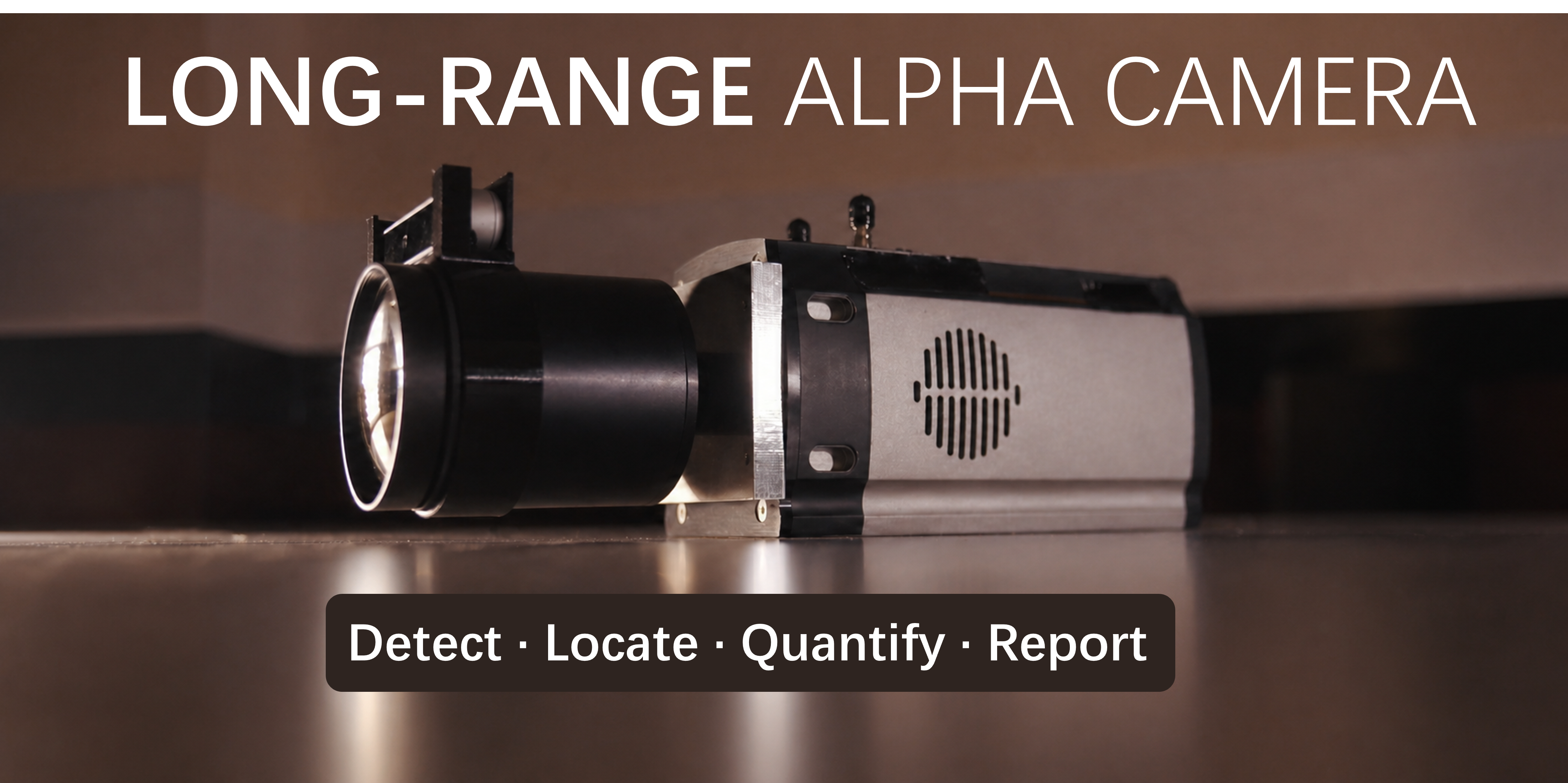
VisionAlpha camera remotely detects, localises and quantifies alpha radioactive contamination as low as 500Bq/cm2 from meters away by imaging the faint UV light generated as alpha particles travel through air.
Why it matters
Traditional alpha surveys usually rely on short-range detectors or paper-based swab tests.
Point-to-point measurements and swab sampling make surveys slow, labour intensive, and difficult to scale.
Close scanning and swab collection require personnel to approach potentially contaminated surfaces.
Alpha contamination is difficult to assess in complex, confined, or inaccessible environments.
Some old alpha emitters can also be located indirectly by imaging gamma rays from decay products such as Am-241, but this approach has several limitations.
Alpha imaging and gamma imaging are complementary technologies rather than direct competitors.
Our advantage
Introduction
A concise overview of the VisionAlpha problem, product, and value proposition.
A deeper conversation about the technology, motivation, and potential impact.
Contact us
Supported by Innovate UK, VisionAlpha can contribute towards development and trial costs.